When a shipment is urgent but too small for a truck, the choice usually comes down to two vehicles: a standard cargo van or a high-roof Sprinter van. Both are dedicated, meaning your freight is the only freight on board, and both move directly from pickup to delivery. The difference is size, and choosing the wrong one can mean paying for space you do not need, or worse, freight that does not fit.
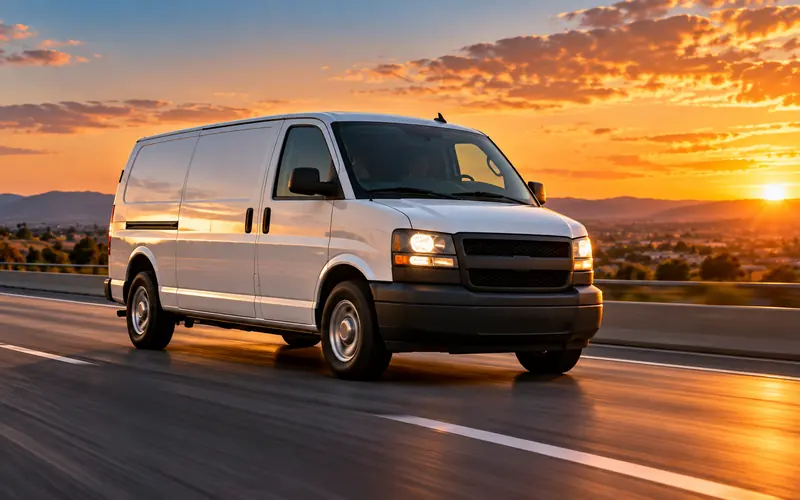

Side-by-side comparison
| Cargo Van | Sprinter Van | |
|---|---|---|
| Typical payload | Up to about 2,000 lbs | Up to about 3,250 lbs |
| Typical cargo area | About 108″ L x 48″ W x 48″ H | About 144″ L x 48″ W x 70″ H |
| Standard pallets | Up to about 2 | Up to about 3 |
| Tall freight | Limited by the lower roof | Fits items up to about 70″ tall |
| Relative cost | Usually the most economical expedited option | Usually a little more than a cargo van |
| Best for | Small urgent shipments, parts, cartons, documents | Larger or taller urgent freight, up to 3 pallets |
These are typical guidelines. Exact dimensions and payload vary by vehicle, so always share your freight dimensions when you request a quote.
When a cargo van is the right choice
A cargo van is ideal when the shipment is small but time-critical. Choose a cargo van when:
- You are shipping one or two pallets, or a handful of cartons or parts.
- Nothing is taller than about 4 feet.
- The total weight is under about 2,000 lbs.
- You want the most economical way to move freight urgently.
Typical cargo van shipments include replacement parts for a down production line, medical supplies, electronics and urgent retail orders.
When you need a Sprinter van
A Sprinter van has a high roof and a longer cargo area, which makes a real difference for bigger or taller freight. Choose a Sprinter van when:
- You have up to three pallets.
- Any piece is taller than a cargo van can fit, up to about 70 inches.
- The shipment is long, such as pipe, tubing or long boxes.
- The weight is between about 2,000 and 3,250 lbs.
Tip: height is the detail shippers most often forget. A pallet that is 5 feet tall will not fit in a standard cargo van, even if the weight is low. Always include height in your quote request.
What if neither van is big enough?
If your freight is more than about three pallets or over about 3,250 lbs but still urgent, the next step up is a straight truck (box truck), which can typically carry up to about 10 pallets. For larger, non-urgent shipments, LTL or full truckload is usually more cost-effective. See all options on our expedited freight page.
Not sure which van fits?
Send us the weight, dimensions and pallet count and we will recommend the right vehicle, 24/7.
Get an Expedited QuoteHow to get the right vehicle the first time
- Measure every piece: length, width and height, including the pallet.
- Weigh the shipment or use an accurate estimate.
- Confirm loading and unloading: dock, forklift or hand unload, and whether a pallet jack is needed.
- Share the deadline so the carrier can plan a direct, dedicated run.
Frequently asked questions
What is the main difference between a cargo van and a Sprinter van?
Size. A Sprinter van has a higher roof and longer cargo area, so it carries taller freight and up to about 3 pallets and 3,250 lbs. A standard cargo van typically carries up to about 2 pallets and 2,000 lbs.
Is a cargo van cheaper than a Sprinter van?
Usually, yes. A cargo van is typically the most economical expedited option, while a Sprinter van usually costs a little more because of its larger capacity.
Can a cargo van or Sprinter van cross into Canada or Mexico?
Yes. Expedited vans can be arranged for cross-border shipments with carriers authorized for cross-border moves and coordination with your customs broker. See our cross-border freight page.
Is my freight the only freight in the van?
Yes. Expedited van shipments are dedicated, so your freight is the only freight on board and travels directly to its destination.