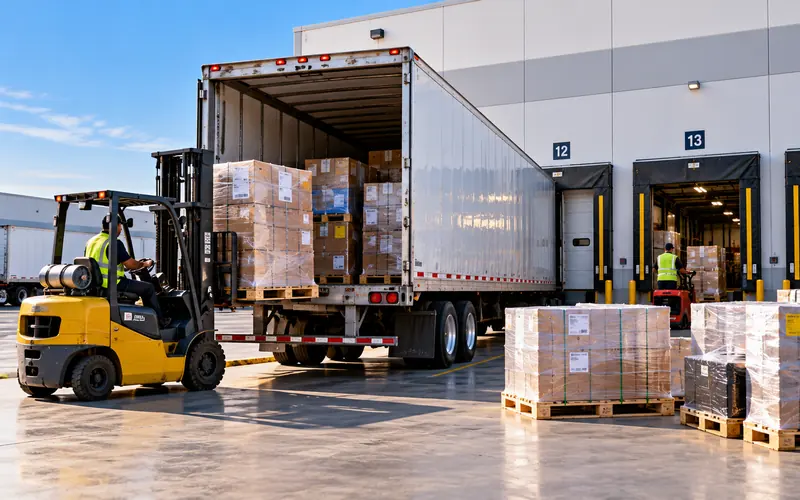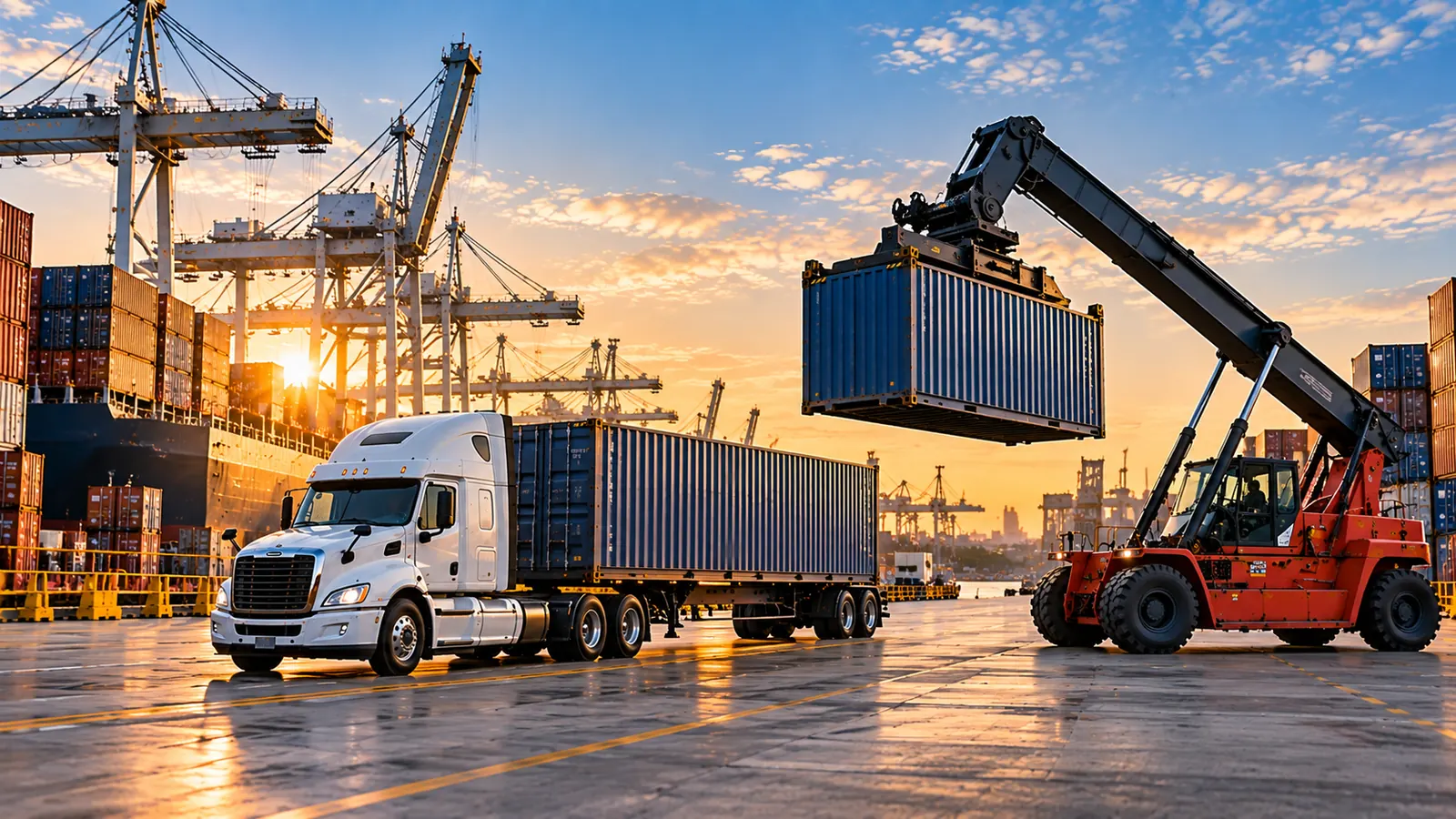
When an ocean container arrives at a U.S. port or an intermodal container reaches a rail terminal, it still has to get to a warehouse, distribution center or factory. That short trip by truck is called drayage. It is usually only a few miles to a few hundred miles, but it is one of the most time-sensitive parts of the supply chain, because terminal deadlines and daily fees start adding up the moment a container is available.
Drayage in one sentence
Drayage is the trucking of shipping containers between a port or rail terminal and a nearby location, such as a warehouse, distribution center, transload facility or another terminal.
Common types of drayage
- Port drayage: moving import or export containers between an ocean terminal and a customer facility.
- Rail (intermodal) drayage: moving containers to or from a rail ramp, often as the first or last leg of an intermodal move.
- Pier-to-pier: moving a container between two terminals, for example from one steamship line’s terminal to another.
- Shuttle drayage: moving a container to a nearby yard for storage, often to avoid terminal fees or congestion.
- Door-to-door: picking up at the terminal and delivering directly to the final customer.
How an import drayage move works
The container is unloaded from the vessel and released by customs and the steamship line.
A drayage truck pulls the container from the terminal, usually with a terminal appointment.
The container is delivered for a live unload or dropped for the receiver to unload.
The empty container is returned to the location the steamship line specifies.
Export moves work in reverse: an empty container is picked up, delivered to the shipper for loading, then returned full to the terminal before the vessel cutoff.
The fees that surprise shippers
Drayage pricing starts with a base rate for the move, but timing is what drives the total cost. These are the charges to understand:
| Charge | What it means |
|---|---|
| Demurrage | Charged when a container stays at the terminal past its free time. It starts after the last free day (LFD). |
| Per diem (detention) | Charged daily when the container or chassis is kept outside the terminal longer than allowed before being returned. |
| Chassis fees | Daily charges for the chassis the container sits on while it is out of the terminal. |
| Prepull | Pulling a container early and holding it at a yard so it can be delivered on time or to beat the last free day. |
| Storage | Yard storage for a container that has been prepulled or cannot be delivered right away. |
| Wait time | Charged when the driver waits beyond the free time at pickup or delivery. |
| Overweight | Extra charges and permits for containers that exceed legal road weight limits. |
Tip: the last free day (LFD) is the most important date in drayage. Know it as soon as your container is available, and plan the pickup well before it. A prepull is often cheaper than several days of demurrage.
What a drayage provider needs from you
- Container number, size and type (20′, 40′, 40′ high cube or 45′)
- Steamship line and the terminal where the container is located
- Customs release and freight release status
- The last free day
- Gross weight and commodity, including any hazardous materials
- Delivery address, receiving hours and whether it is a live unload or drop
- Where the empty container must be returned
Have a container coming in?
Send us the container number, terminal, weight and last free day, and we will plan the pickup before the fees start.
Request a Drayage QuoteDrayage in Georgia: the Port of Savannah
The Port of Savannah is one of the busiest container ports in the United States, and its main container terminal handles a huge share of the freight moving into the Southeast. For shippers in Atlanta and North Georgia, that means a steady flow of containers that need drayage, either directly from Savannah or through inland rail connections.
- Direct from Savannah: containers trucked from the port to warehouses and distribution centers across Georgia and the Southeast. Atlanta is roughly 250 miles away, about a 4-hour drive.
- Inland rail connections: some containers move from Savannah by rail to inland terminals, such as the Appalachian Regional Port in northwest Georgia, then finish the trip by drayage.
- Atlanta rail ramps: intermodal containers arriving by rail at Atlanta-area ramps need drayage to their final destination.
Long-distance container moves often combine drayage with intermodal rail or truckload service after the freight is unloaded.
How to keep drayage costs under control
- Track containers from the moment they leave the origin port.
- Clear customs and confirm the freight release early.
- Book drayage before the container is available, not after.
- Make sure your receiver can unload promptly so the empty can be returned quickly.
- Use prepulls and yard storage strategically when the last free day is close.
Frequently asked questions
What is drayage in shipping?
Drayage is the short-distance trucking of shipping containers between a port or rail terminal and a nearby location, such as a warehouse, distribution center or transload facility.
What is the difference between demurrage and per diem?
Demurrage is charged when a container stays inside the terminal past its free time. Per diem, or detention, is charged when the container or chassis is kept outside the terminal longer than allowed before it is returned.
What is a prepull?
A prepull is when a container is picked up from the terminal early and held at a nearby yard, usually to avoid demurrage before the last free day or to make a delivery appointment.
Do you arrange drayage from the Port of Savannah?
Yes. ANKA UNITED INC coordinates container drayage at ports and rail ramps, including moves serving Georgia and the Southeast. Send us the container details for a quote.