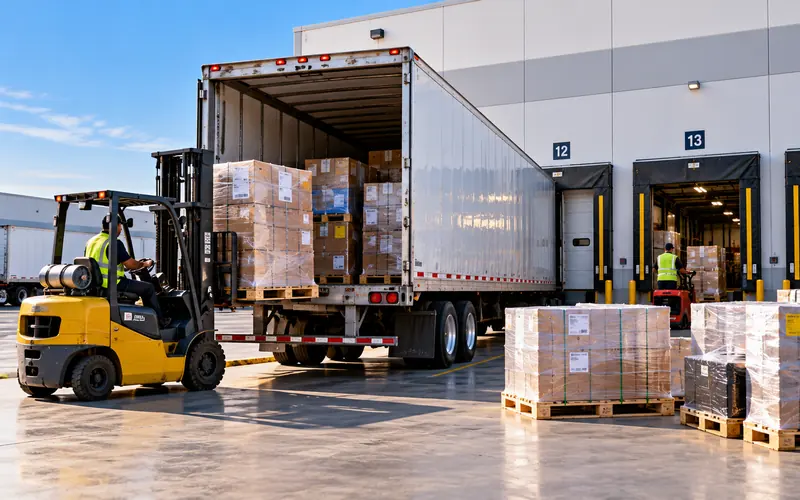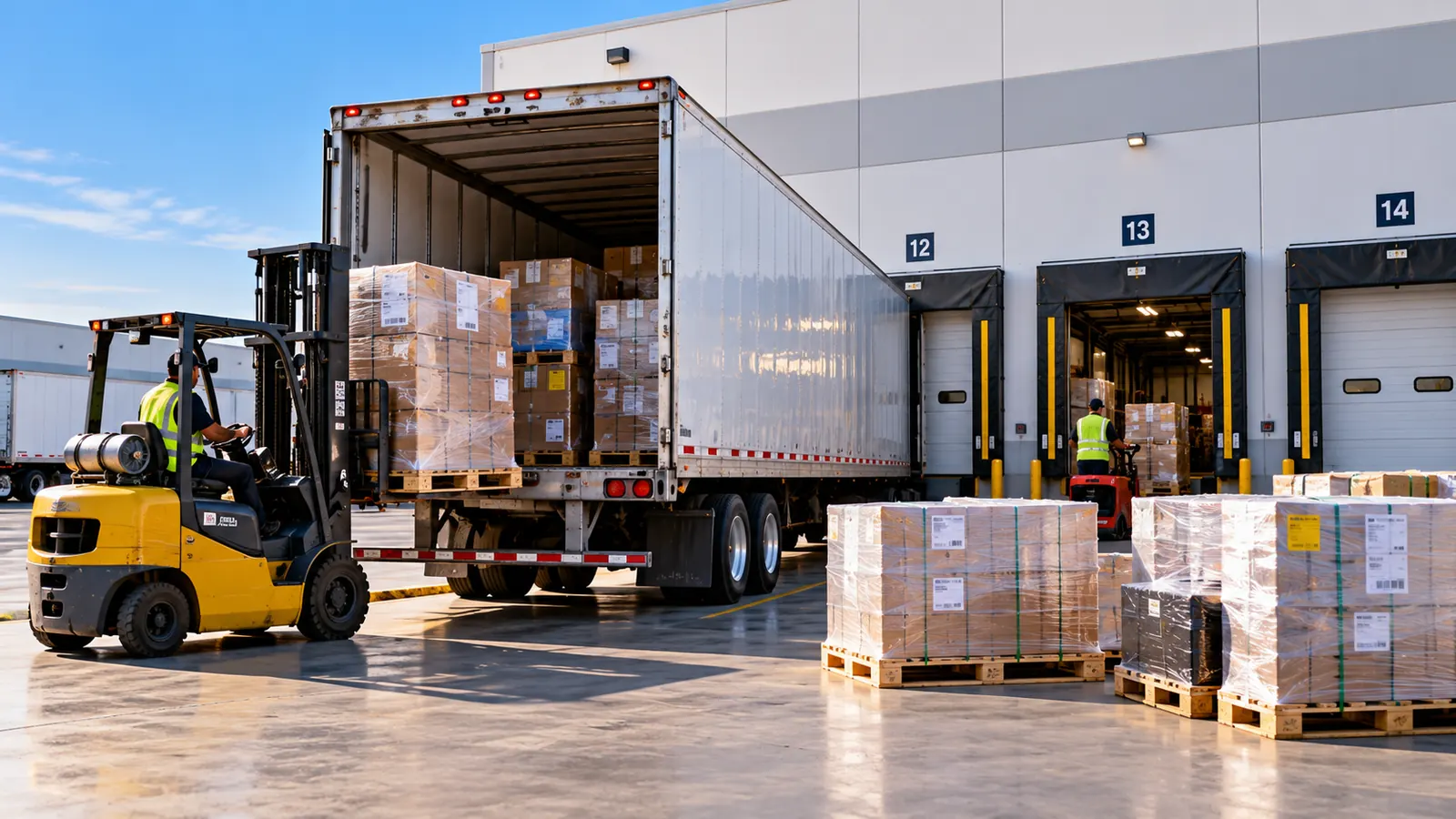
Choosing between full truckload (FTL) and less-than-truckload (LTL) is one of the most common decisions in shipping, and one of the easiest places to overspend. Ship a small load as FTL and you pay for an empty trailer. Ship a large load as LTL and you may pay more, wait longer and risk more handling damage. Here is how to get it right.
The quick difference
- Full truckload (FTL): your freight gets a dedicated trailer and moves directly from pickup to delivery.
- Less-than-truckload (LTL): your freight shares a trailer with other shippers and moves through a network of terminals, so you pay only for the space and weight you use.
Side-by-side comparison
| LTL | FTL | |
|---|---|---|
| Typical size | About 1 to 6 pallets | About 10 or more pallets, up to a full 53′ trailer |
| Typical weight | Under roughly 10,000 lbs | Heavier loads, up to about 43,000 to 45,000 lbs |
| Trailer | Shared with other shippers | Dedicated to your freight |
| Handling | Moves through terminals, may change trailers | Loaded once, unloaded once |
| Transit time | Usually longer and less predictable | Usually faster and more predictable |
| Pricing | Based on weight, freight class, distance and accessorials | Based mainly on lane, equipment and market capacity |
| Best for | Smaller, non-urgent, well-packaged shipments | Large, fragile, high-value or time-sensitive freight |
These are general guidelines. Actual capacity and pricing depend on the freight, lane and equipment.
The middle ground: volume LTL and partial truckload
Many shipments fall in between, roughly 6 to 12 pallets. For these, there are two often-overlooked options:
Priced by weight and freight class through a terminal network.
Quoted on space used, often with fewer stops and less handling than standard LTL.
Dedicated trailer moving directly from pickup to delivery.
For mid-size shipments, a volume LTL or partial truckload quote can cost less than standard LTL and less than a full truck. It is always worth comparing.
Five questions to decide
- How many pallets, and how much weight? Small and light usually means LTL. Large or heavy usually means FTL.
- How urgent is it? FTL moves directly and is usually faster. If it cannot wait at all, consider expedited freight.
- How fragile or valuable is it? Less handling with FTL means less risk of damage.
- Is it well packaged? LTL freight should be palletized, shrink-wrapped and labeled to survive terminal handling.
- What does each option actually cost? Compare quotes. Near the break-even point, the cheaper mode can change from week to week.
Not sure which is cheaper for your shipment?
Send us the pallet count, weight, dimensions and lane. We will compare LTL, partial and full truckload options for you.
Compare My OptionsLTL pricing basics: freight class
LTL rates depend heavily on freight class, a standardized classification based mainly on density (weight per cubic foot), plus handling and liability. In general, dense freight gets a lower class and a lower rate per pound, while light, bulky freight gets a higher class and costs more per pound.
Tip: inaccurate weights or dimensions are the most common cause of LTL re-weigh and re-class charges after pickup. Measure and weigh carefully before you book.
Practical ways to lower your freight costs
- Consolidate shipments so you ship fewer, fuller loads.
- Optimize packaging to increase density and reduce wasted space.
- Be flexible on pickup dates when you can. A day or two of flexibility often lowers the rate.
- Disclose accessorials up front (liftgate, residential delivery, appointments) to avoid surprise charges.
- Get quotes for both modes when your shipment is near the break-even point.
Frequently asked questions
What is the difference between FTL and LTL?
FTL gives your freight a dedicated trailer that moves directly from pickup to delivery. LTL shares trailer space with other shippers and moves through terminals, so you pay only for the space and weight you use.
When does full truckload become cheaper than LTL?
As a general guideline, shipments of around 10 or more pallets, or heavier loads, are often cheaper as full truckload. Mid-size shipments of about 6 to 12 pallets should be quoted both ways, including volume LTL or partial truckload.
What is partial truckload?
Partial truckload, often called volume LTL, is an option for mid-size shipments that do not fill a full trailer. It is usually quoted based on the space used and typically involves fewer stops and less handling than standard LTL.
Is FTL faster than LTL?
Usually, yes. FTL moves directly from pickup to delivery, while LTL moves through terminals and may change trailers, which adds time.